
.png)
"Your substrate has failed, so we'll need PU injection at the cold joints before applying a torch-on membrane, followed by a mandatory ponding test."
If a contractor said that to you, would you know what you're paying for?
Waterproofing comes with a vocabulary of its own. Most homeowners nod along during site inspections, not wanting to appear uninformed, then quietly Google the terms afterwards. We think you should know exactly what's being discussed before you commit thousands of dollars to repairs.
Here are eight essential waterproofing terms every Singapore homeowner, facility manager, and renovator should understand. We have translated each one from contractor-speak into plain English.

What your contractor means: "We are going to pump a liquid plastic into the crack, and it will expand to fill the gap completely."
The plain English version:
PU stands for polyurethane. A PU grout injection is a no-hacking repair method used to seal cracks in concrete walls, floors, and ceilings. A liquid resin is injected under pressure into a crack. When it contacts moisture inside the concrete, it expands aggressively — up to 40 times its original volume — forcing water out and permanently sealing the crack from the inside.
When you will hear this term: When you have a ceiling leak from the unit above, a hairline crack in a retaining wall, or water seeping through a concrete joint. It is the most common alternative to full hacking and re-waterproofing.
Real example: Your living room ceiling has a damp patch. Instead of hacking the entire upstairs neighbour's bathroom, the contractor injects PU grout into the specific crack in the slab. The leak stops without a single tile being removed.
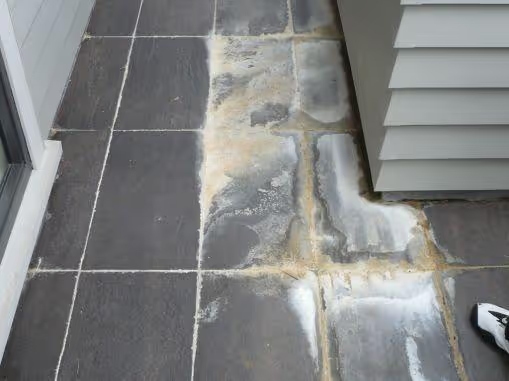
What your contractor means: "There are white, chalky salt deposits on your wall, which means water has been moving through it."
The plain English version:
Efflorescence appears as a white, powdery stain on concrete, brick, or plastered walls. It happens when water travels through the wall material, dissolving natural salts inside the concrete or bricks. When the water reaches the surface and evaporates, it leaves the salt behind. The stain itself is harmless, but the water movement causing it is not.
When you will hear this term: During inspections of basement walls, external facades, or areas with persistent dampness.
Read more: We have a detailed guide on What Is Efflorescence? Causes, Prevention & Solutions that explains how to remove the stains and stop the water source permanently.
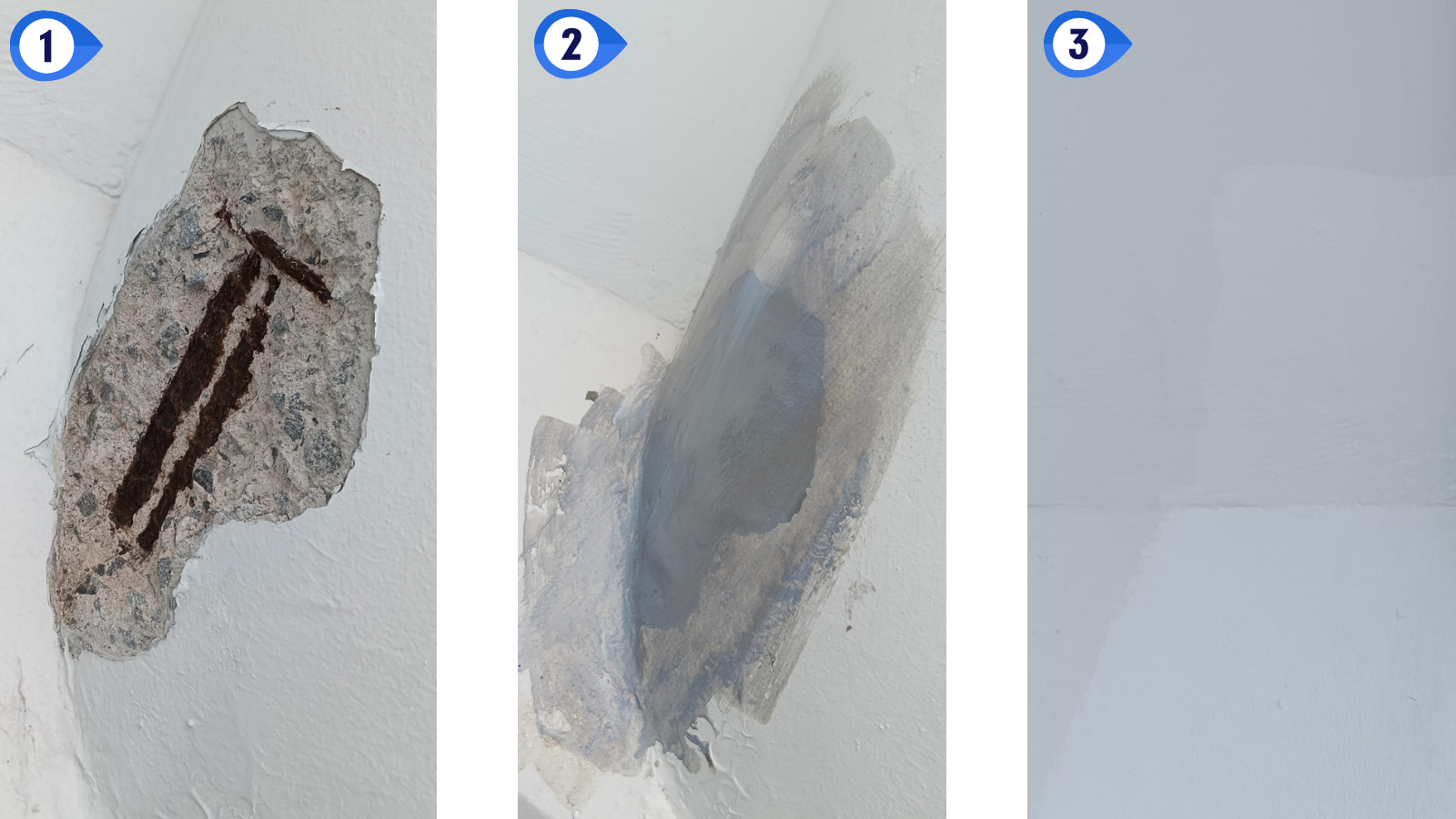
What your contractor means: "The concrete is literally breaking apart from the inside, and the steel reinforcement is rusting."
The plain English version:
Spalling is when chunks of concrete flake, crack, or fall away from a ceiling, wall, or column. It starts when water and carbon dioxide penetrate the concrete, eventually reaching the steel reinforcement bars (rebar) inside. The steel rusts, expands, and pushes the surrounding concrete apart from within. This is a structural safety issue, not just a cosmetic one.
When you will hear this term: When you see exposed rusty metal bars on a ceiling, cracked concrete columns in a carpark, or loose concrete flakes on a balcony ledge.
Read more: Our article on Spalling Concrete in Singapore: What and How to Fix It covers causes, repair methods, and prevention.
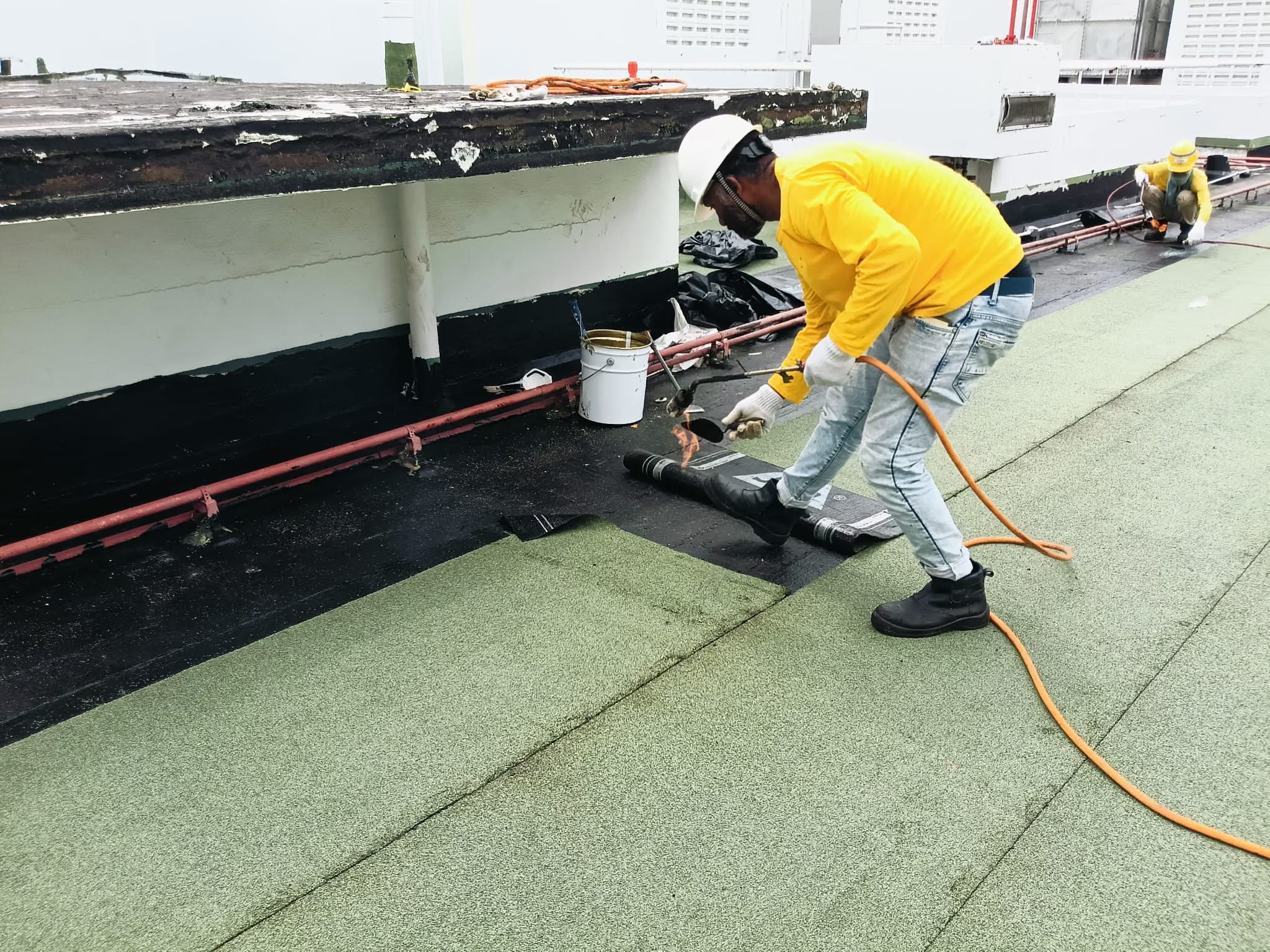
What your contractor means: "We are going to heat a thick waterproof sheet with a flame until it melts onto your roof."
The plain English version:
A torch-on membrane is a heavy-duty waterproofing sheet made from modified bitumen (a rubberised asphalt material). It comes in rolls. The contractor uses a propane torch to heat the underside of the sheet, melting it onto the prepared concrete roof surface. Each roll overlaps the next to create a continuous, seamless barrier. It is one of the most durable waterproofing methods for exposed flat roofs in Singapore's climate.
When you will hear this term: For flat concrete roofs, RC ledges, balconies, and planter boxes — any horizontal or near-horizontal surface exposed to heavy rain and sun.
Read more: Learn how it works and when it is the right choice in our Torch-On Membrane Waterproofing Singapore article.

What your contractor means: "We are going to fill your bathroom with water for 24 hours to prove there are no leaks before we tile it."
The plain English version:
A ponding test is a waterproofing quality control step. After the waterproofing membrane has been applied and fully cured, the floor trap is plugged and the bathroom floor is filled with water to a depth of 25–50mm. This water sits for at least 24 hours. Afterwards, the ceiling of the unit below is inspected for any signs of moisture. If it is completely dry, the membrane has passed. If there is dampness, the membrane has a defect and must be repaired or reapplied before tiling proceeds.
When you will hear this term: During bathroom renovations. This test is a requirement under Singapore Standard SS 637:2018 (Code of Practice for Waterproofing of Buildings).
Homeowner tip: Always ask for photo proof that the ponding test was done and the result. If a contractor refuses or says it is unnecessary, find another contractor. Fixing a leak after tiling costs thousands.
What your contractor means: "We have to waterproof from the inside because we cannot access the outside of the wall."
The plain English version:
Waterproofing is ideally applied on the "positive side" — the outside surface where the water hits first. Think of it like wearing a raincoat outside, not inside. But sometimes, the outside surface is inaccessible: it might be buried underground, against a neighbouring property, or inside a lift shaft. When waterproofing is applied from the dry internal side, against the direction of water pressure, it is called negative side waterproofing.
When you will hear this term: For basement internal walls, lift pits, underground MRT tunnels, and party walls where excavation from outside is impossible.
Real example: Water seeps through a basement wall that backs onto earth. Digging up the outside is not an option. A crystalline waterproofing slurry is applied to the inside wall surface. The chemicals react with moisture and grow crystals into the concrete pores, blocking water from the inside out.
What your contractor means: "Water is pushing against your wall or floor with force, and that is why the leak keeps coming back."
The plain English version:
Hydrostatic pressure is the weight of water pressing against a surface. The deeper the water or the wetter the soil, the higher the pressure. This pressure forces water through the smallest cracks, pinholes, or porous concrete. Surface sealants often fail against hydrostatic pressure because water pushes them off from behind.
When you will hear this term: For basement leaks, underground carpark seepage, swimming pool structure leaks, and any below-ground waterproofing situation.
Simple analogy: Put a piece of sticky tape over a pinhole in a plastic bottle. If you fill the bottle with water and squeeze, the pressure blows the tape off. That is what hydrostatic pressure does to the wrong waterproofing applied on the wrong side.
What your contractor means: "Sealant is for filling gaps. Membrane is for covering surfaces. They do different jobs."
When you will hear this term: When a contractor explains that re-sealing your window perimeter (sealant job) is different from re-waterproofing your whole bathroom floor (membrane job). One fixes a specific entry point. The other creates an entire waterproof layer.
The plain English version:
Understanding these terms puts you in control. You can ask better questions, spot when something does not sound right, and make informed decisions about your property.
At Triton Construction, we believe in explaining things clearly. No jargon-for-the-sake-of-jargon. Our site inspections always include a plain-English summary of what we found, what needs to be done, and why.
If you are dealing with a leak, a renovation, or a waterproofing question you need explained in simple terms, we are here to help.
Serving HDB, Condos, and Landed Homes across Singapore.
BizSAFE certified. BCA registered.