
.png)
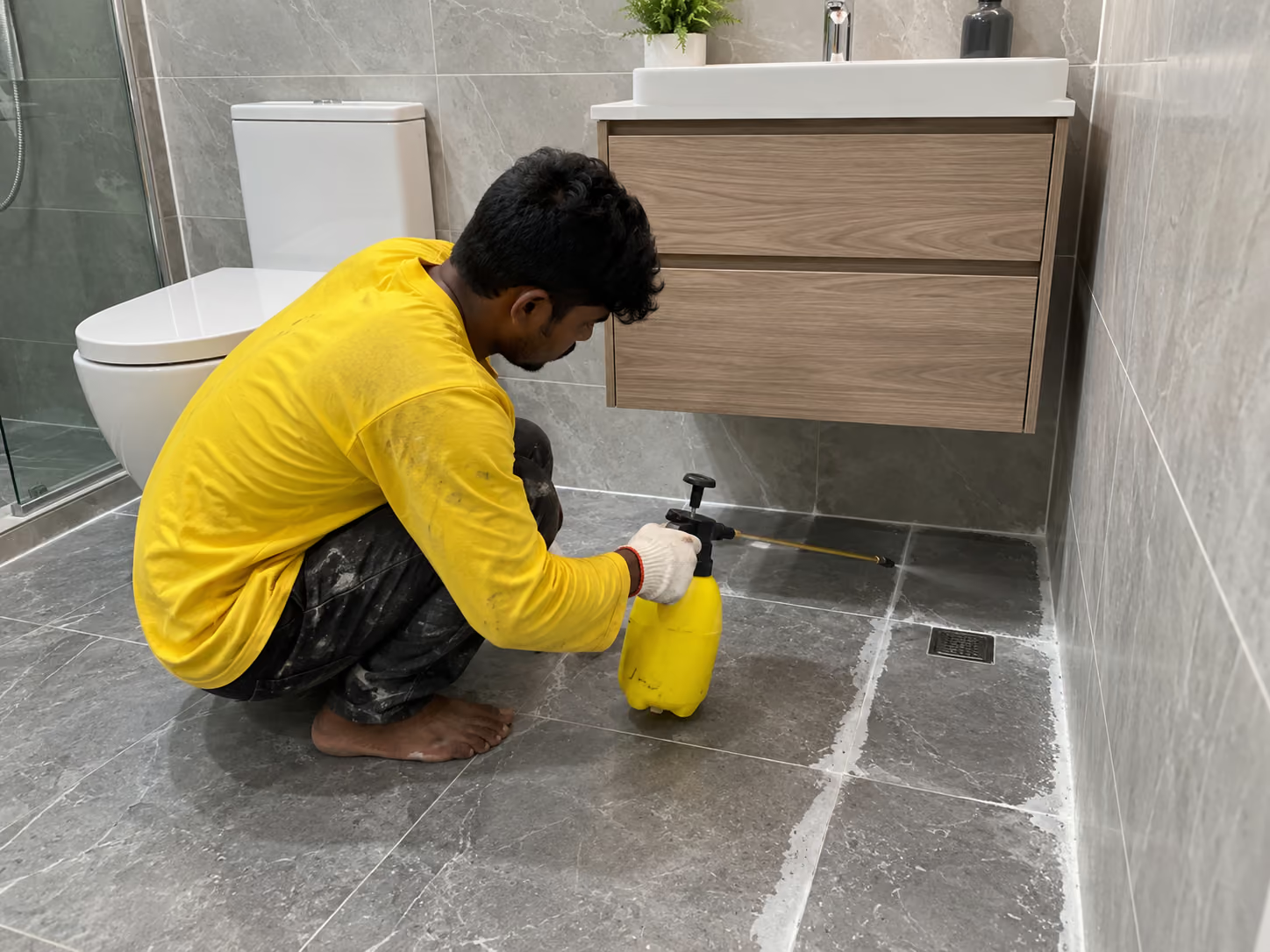
No-hacking waterproofing is not always a permanent solution for water leakage.
It may help in selected cases where the leak is localised, such as a small crack, joint, or pipe surrounding leakage. However, if the actual waterproofing layer has failed, water is trapped below tiles, or the source of leakage is not properly identified, the leak may come back again.
In simple terms: no-hacking waterproofing may treat the visible leakage point, but it does not always solve the root cause.
Many homeowners prefer no-hacking waterproofing because it sounds faster, cleaner and less disruptive.
It can be attractive because it may avoid:
This is understandable, especially if the property is occupied or recently renovated.
However, the least disruptive method is not always the most lasting method.
The main issue is that no-hacking waterproofing may not reach the actual failed waterproofing layer.
For bathrooms, balconies, planter boxes and wet areas, the waterproofing membrane is usually hidden below tiles, screed or finishes. If that layer has already failed, applying a surface treatment or injecting one area may not fully stop water from spreading below the surface.
That means the leak may reduce for a while, then return later from the same area or another nearby point.
Water leakage can come back when the repair does not address the source.
Common reasons include:
If the membrane below the tiles has deteriorated, cracked or detached, water may continue to seep underneath the surface.
No-hacking repair may seal one visible leakage point, but the failed membrane may still allow water to travel elsewhere.
This is common in older bathrooms, balconies and wet areas.
If water has been collecting below tiles or inside the screed for a long time, the area may remain wet even after surface repair.
The trapped moisture can continue to cause:
In such cases, the leak may appear to stop temporarily but return later.
A ceiling stain or wall stain does not always appear directly below the source.
Water can travel through concrete, joints, pipes, walls and floor layers before showing up elsewhere. If the wrong area is treated, the leak will likely recur.
For example, a ceiling leak may actually be caused by:
Without proper diagnosis, no-hacking waterproofing becomes guesswork.
Some leaks are not caused by one crack or one joint.
Older bathrooms, balconies, roofs and external walls may have several weak points. Sealing only one area may not stop water from entering through another path.
This is why some homeowners experience repeated leakage even after several patch-up repairs.
No-hacking waterproofing depends heavily on the condition of the existing surface.
It may not work well if there are:
If the base condition is poor, a surface-level repair may not last.
No-hacking waterproofing may still be useful in selected situations.
It may work when:
Examples may include certain cases of PU injection grouting, pipe surrounding leakage repair, crack injection, joint sealing or surface treatment.
However, it should only be recommended after proper assessment.
No-hacking waterproofing may not be suitable if:
In these cases, hacking and reinstating the waterproofing layer may be the more reliable solution.
Triton Construction Pte Ltd provides waterproofing and water leakage repair services for residential, commercial and industrial properties in Singapore.
We understand that homeowners prefer clean and minimally disruptive repairs. Where suitable, we can assess no-hacking waterproofing options such as PU injection grouting, crack sealing, joint repair or pipe surrounding leakage repair.
However, we also advise when no-hacking repair may not be enough. If the waterproofing membrane has failed, water is trapped below tiles, or recurrence is likely, we will recommend a more suitable repair approach.
Our goal is not just to stop the leak temporarily. Our goal is to identify the source and reduce the chance of recurrence.
Our services include:
No-hacking waterproofing may sound convenient, but it is not always the right long-term solution.
If your leak has returned after previous repair, or you are unsure whether no-hacking waterproofing is suitable, Triton Construction can help assess the source and recommend the right approach.
Send us clear photos and videos of the affected area for an initial assessment.
Contact Triton Construction today for waterproofing and water leakage repair in Singapore.