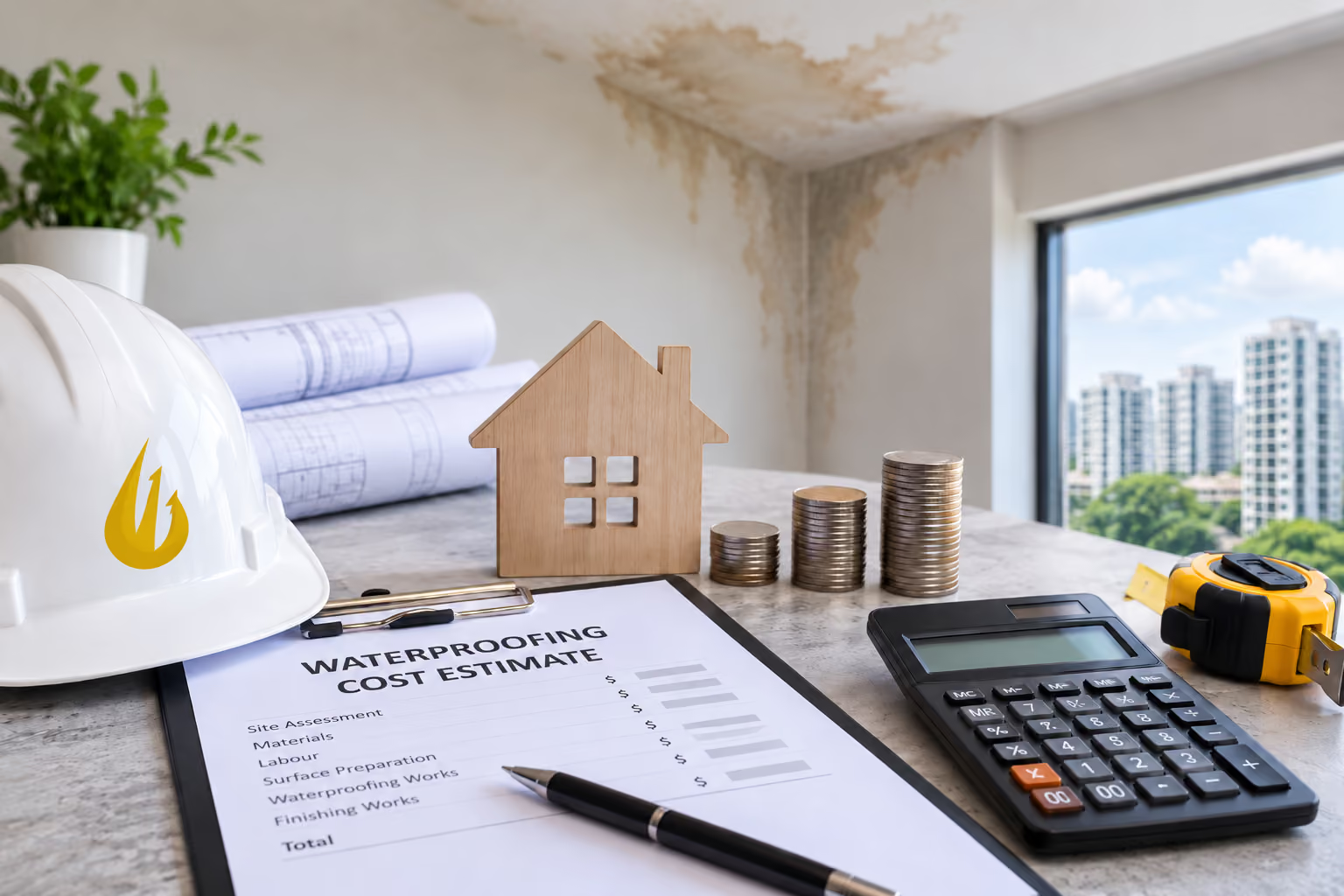
Waterproofing Cost in Singapore 2026: What Affects the Price?

Waterproofing Leak Expert
Wei Jie
Last Updated: 19 Sep 2026
7 min read
Close-up of a red tiled roof with visible cracks and sealant applied along the tile edges indicating roof repair, water leakage issues

Quick Answer

Waterproofing in Singapore typically costs between S$500 and S$15,000+ in 2026.

A targeted bathroom repair may run S$400–S$1,500, PU injection for a ceiling leak S$600–S$1,800, and full roof waterproofing for a landed property S$5,000–S$25,000. The final price depends on the area being treated, the waterproofing method, the extent of the damage, and how much preparation or reinstatement work is needed.

There is no single "market rate" for waterproofing — and any contractor who quotes you a fixed price without a site inspection is guessing. This guide breaks down realistic 2026 price ranges by area and method, explains the factors that move a quote up or down, and shows you how to compare quotations properly.

Waterproofing Cost in Singapore: Quick Reference Table (2026)

Area / Service What It Typically Covers Typical 2026 Price Range
Bathroom / toilet — targeted repair Localised treatment without hacking, for an isolated leak source with sound tiles and grout S$400 – S$1,500
Bathroom — full hack & rewaterproof Hacking and disposal, slab drying, fresh membrane, screed, retiling and reinstatement S$1,500 – S$5,000+
PU injection — ceiling leak (HDB / condo) Polyurethane resin injected into a slab crack or inter-floor joint, then patched and painted over S$600 – S$1,800
Multi-point or spalling-related ceiling repair Several leak paths, or concrete repair where reinforcement bars are exposed and rusting From S$2,500
Roof waterproofing — per square metre Rate varies by system — acrylic coating at the lower end, PU and torch-on membranes at the higher end S$10 – S$60 per m²
Roof waterproofing — full landed property Approximately 800–1,500 sq ft of flat roof, including surface preparation and drainage corrections S$5,000 – S$25,000
Balcony / planter box Membrane application with upturn and drainage detailing, plus reinstatement of the finish S$800 – S$3,000
External wall / façade (rope access) Crack sealing and coating at height; priced per project once access and extent are assessed On assessment
Basement / underground structures Heavy-duty barrier systems and crack injection to resist hydrostatic pressure S$5,000 – S$25,000+

Ranges are indicative planning references for 2026 and assume work by a licensed waterproofing specialist. Final pricing depends on the area treated, waterproofing method, extent of damage, access, and the scope of preparation and reinstatement works. An on-site inspection is required for an accurate quotation.

What Affects Waterproofing Cost in Singapore?

1. The area being waterproofed

Each part of a building has different requirements. Bathrooms and kitchens need wet-area membranes and proper detailing at floor traps and pipe penetrations. Roofs need UV-resistant systems that can withstand Singapore's rainfall and heat cycles. Basements face hydrostatic pressure and need heavy-duty barrier systems — which is why basement waterproofing sits at the top of the price range.

2. The waterproofing method

  • PU (polyurethane) injection / grouting — resin is injected into cracks and expands on contact with water, sealing the leak path without hacking. Cost-effective for localised slab cracks and joint seepage, but the wrong tool for a generally failed membrane.
  • Liquid-applied membranes (PU, acrylic, cementitious) — roughly S$25–S$100 per m² depending on the system, number of coats and surface preparation. The standard for wet areas and flat roofs.
  • Sheet / torch-on membranes — higher material and labour cost, longer lifespan; common on RC flat roofs.
  • Non-hacking overlay systems — S$800–S$1,500 per bathroom for suitable cases (sound tiles, single leak source). Cheaper upfront, but only appropriate when the existing screed and tiles are intact.

3. Severity and root cause of the leak

A hairline crack with one leak path is a half-day PU injection job. Saturated screed, cracked tiles or multiple leak paths mean the honest fix is hacking out, drying the slab, applying a fresh membrane, screeding and retiling — which multiplies the cost. This is also why the gap between a localised patch (S$200–S$800) and a full redo (thousands) is so wide.

4. Preparation, access and reinstatement

Hacking and disposal, drainage corrections, removal of an old failed membrane, scaffolding or rope access for façades, and retiling after the waterproofing itself — these line items often cost more than the membrane. Two quotes for the "same" bathroom can differ by thousands simply because one includes reinstatement and the other doesn't.

5. Warranty and testing

A proper wet-area job should include a 24-hour ponding test before handover, and reputable specialists back their work with a written warranty (typically 1–10 years depending on the system). Longer warranties and better membrane systems cost more upfront but are usually cheaper per year of protection.

Waterproofing Cost by Property Type

HDB flats. The most common jobs are bathroom membrane failures and inter-floor ceiling leaks. For ceiling leaks caused by the unit above, HDB's default position is a 50/50 cost share between the upper- and lower-floor owners, and eligible flats may qualify for HDB's Goodwill Repair Assistance scheme. Most HDB ceiling leaks fixed at source fall between S$600 and S$1,800.

Condominiums. Similar methods to HDB, but management corporation (MCST) approval may be needed for works affecting common property, external walls or façades. Inter-floor disputes follow a similar shared-responsibility logic, but check your MCST by-laws.

Landed property. The biggest-ticket items: full roof waterproofing on an 800–1,500 sq ft flat roof typically lands between S$5,000 and S$25,000 depending on method and roof condition. If you're planning solar panels, waterproof the roof first — redoing it later means paying to remove and reinstall the panels.

How to Compare Waterproofing Quotes (Without Getting Burned)

  1. Insist on a site inspection first. Two contractors quoting different prices may be quoting entirely different solutions — one targeting a local crack, the other proposing a full membrane redo.
  2. Ask for an itemised scope with exclusions stated. Hacking, disposal, retiling and making good should be listed separately.
  3. Check that a ponding test is included for wet areas, with the duration specified.
  4. Get the warranty in writing — start date, duration, and the claim process.
  5. Be wary of the cheapest quote. A S$500 patch that fails in six months costs more than a S$1,500 fix done at source.

Get an Accurate Quote for Your Property

Online price ranges tell you what's reasonable — only an inspection tells you what your repair costs. Triton Construction provides on-site assessments across Singapore, with itemised quotations, ponding tests on all wet-area works, and written warranties. Contact us for a no-obligation inspection and quote.

Contact us now

Frequently Asked Questions (FAQ)

Let us answer your questions about waterproofing.
How much does bathroom waterproofing cost in Singapore?

A targeted repair without hacking typically costs S$400–S$1,500 for an HDB-sized bathroom. A full hack-and-rewaterproof with new tiles usually runs S$1,500–S$5,000+, depending on the membrane system and finishes.

How much is PU injection in Singapore?

Most single-location PU injection jobs for HDB or condo ceiling leaks cost S$600–S$1,800. Multi-point leaks or jobs involving spalling concrete can exceed S$2,500.

How much does roof waterproofing cost per square metre?

Professional roof waterproofing in Singapore generally costs S$10–S$60 per m² in 2026, depending on the system (acrylic, PU, torch-on membrane) and roof condition. Full projects on landed homes typically total S$5,000–S$25,000.

Who pays for a ceiling leak in an HDB flat?

HDB's default position is a 50/50 split between the upper- and lower-floor owners, since the leak usually originates from the floor slab shared between units. Eligible cases may receive support under HDB's Goodwill Repair Assistance scheme.

How long does waterproofing last?

A properly installed membrane typically lasts 5–10 years or more; premium roof systems can last significantly longer. If your property hasn't been waterproofed in over a decade, an inspection is worth scheduling before a leak appears.

Waterproofing Leak Expert
Wei Jie
Triton Construction - Your Waterproofing Specialist