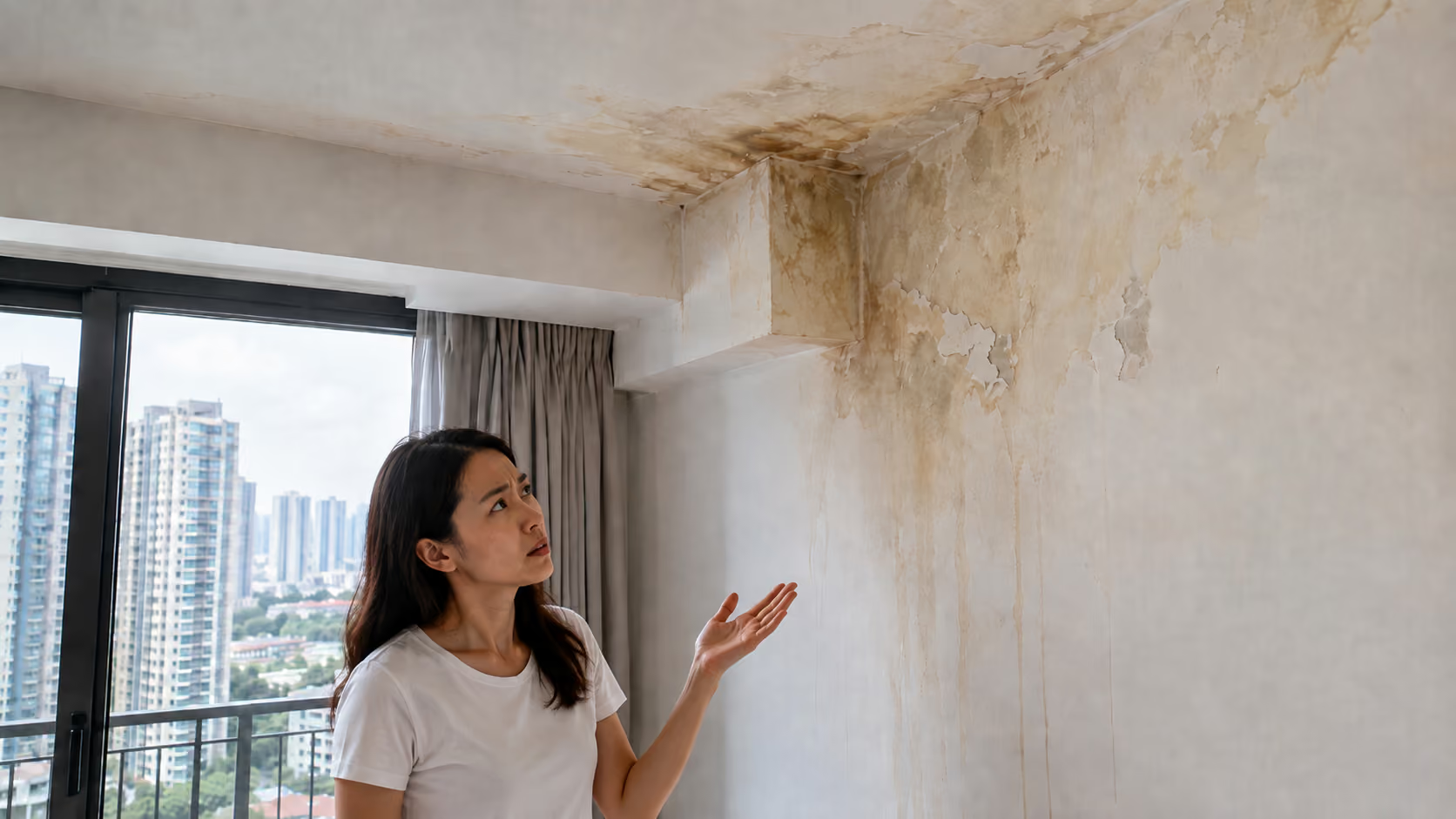
Water Stain on the Walls & Ceiling: What Are the Possible Causes?

Waterproofing Leak Expert
Wei Jie
Last Updated: 30 Aug 2026
8 min read
Close-up of a red tiled roof with visible cracks and sealant applied along the tile edges indicating roof repair, water leakage issues

Quick Answer

Water stains on walls and ceilings are usually caused by one of these 3 main issues:

  1. Rainwater seepage from external areas such as the roof, external wall, window frame, balcony, planter box or drainage system.
  2. Internal leakage from pipes or wet areas such as bathrooms, kitchens, yards, concealed pipes or pipe surrounding areas.
  3. Condensation, aircon or indoor moisture issues caused by poor ventilation, blocked aircon drainage, cold surfaces or high indoor humidity.

A water stain may look like a simple cosmetic issue, but it can be an early sign of hidden moisture or water seepage. If the stain keeps returning, spreads after rain, or causes peeling paint and mould, the source should be checked before repainting.

Why Water Stains Should Not Be Ignored

Many homeowners only notice water stains when they become obvious — a brown ceiling patch, a yellow mark on the wall, peeling paint, bubbling plaster or mould near a corner.

However, the visible stain is usually only the symptom. The actual source of moisture may be above, behind, outside or inside the wall.

If the source is not fixed, the stain may return even after repainting.

Common warning signs include:

  • Brown or yellow stains on the ceiling
  • Damp patches on walls
  • Peeling or bubbling paint
  • White powdery stains
  • Mould growth
  • Musty smell
  • Water streaks running down the wall
  • Stains that return after repainting
  • Ceiling stains that appear after rain
  • Wall dampness near windows, bathrooms or balconies

The key is to identify the source before repairing the surface.

Cause 1: Rainwater Seepage from External Areas

If the water stain appears mainly during or after rain, the source may be external.

Rainwater can enter through small cracks, gaps or weak points around the building. Once inside, it may travel through concrete, wall cavities, joints or ceiling areas before appearing as a stain indoors. This is why the stain may not be directly below the actual leakage point.

Common External Sources of Water Stains

Rainwater seepage may come from:

  • Roof cracks
  • Failed roof waterproofing
  • External wall cracks
  • Window frame gaps
  • Worn sealant around windows
  • Balcony waterproofing failure
  • Planter box leakage
  • Blocked gutters
  • Poor roof drainage
  • Cracks around wall joints
  • Water entering through concrete gaps

Signs It May Be Rainwater Seepage

The stain may be rain-related if:

  • It appears after heavy rain
  • It becomes darker during wet weather
  • It fades during dry weather but returns again
  • It is near an external-facing wall
  • It is close to a window or balcony
  • It appears on a top-floor ceiling
  • Paint peels after rainy periods
  • Mould grows near wall or ceiling corners

For landed houses, roof leakage and external wall seepage are common areas to check. For condos and apartments, window edges, balcony areas and external-facing walls may also be possible sources.

Cause 2: Internal Leakage from Pipes or Wet Areas

If the stain appears even when there is no rain, the issue may be internal.

This can happen when water leaks from concealed pipes, bathroom areas, kitchen areas, yard areas or pipe penetrations. It can also happen when the waterproofing layer beneath tiles has failed. Unlike rainwater seepage, internal leakage may continue during dry weather.

Common Internal Sources of Water Stains

Internal leakage may come from:

  • Concealed pipe leakage
  • Water supply pipe leakage
  • Sanitary pipe leakage
  • Drainage pipe leakage
  • Pipe surrounding leakage
  • Bathroom waterproofing failure
  • Kitchen or yard seepage
  • Floor trap or pipe penetration gaps
  • Wet-area leakage from the unit above
  • Failed waterproofing beneath tiles

Signs It May Be Pipe or Wet-Area Leakage

The stain may be caused by internal leakage if:

  • It appears even during dry weather
  • Water drips continuously
  • The stain is below a bathroom
  • The stain is below a kitchen or yard
  • The leak worsens after water is used
  • There is a water mark around pipe areas
  • The ceiling stain grows slowly over time
  • The same stain returns after repainting
  • The area has a musty smell or mould

If the issue is caused by a pipe, a licensed plumber may be required. If the issue is caused by failed waterproofing around a bathroom, balcony or wet area, a waterproofing specialist should assess the affected area.

Cause 3: Condensation, Aircon or Indoor Moisture Issues

Not every water stain is caused by waterproofing failure.

Some stains are caused by condensation, aircon drainage issues, poor ventilation or high indoor humidity. This is especially common in enclosed rooms, bathrooms, bedrooms with frequent aircon use, and areas behind wardrobes or cabinets.

Condensation happens when warm, moist air touches a cooler surface. Over time, moisture may collect and leave stains, mould or damp patches.

Common Moisture or Aircon-Related Causes

These stains may be caused by:

  • Aircon condensation
  • Blocked aircon drainage pipe
  • Poor aircon pipe insulation
  • Leaking fan coil unit
  • Water backflow from aircon drainage
  • Poor ventilation
  • High indoor humidity
  • Furniture placed too close to walls
  • Cold wall or ceiling surfaces
  • Moisture trapped behind cabinets or wardrobes

Signs It May Be Condensation or Aircon-Related

The stain may be related to condensation or aircon issues if:

  • It appears near aircon trunking
  • It appears after long aircon usage
  • Mould grows in poorly ventilated corners
  • The wall feels damp but there is no active leak
  • The stain is behind wardrobes or cabinets
  • The room has poor airflow
  • The issue improves with better ventilation
  • There is no clear rain or pipe leakage pattern

Although condensation is different from water seepage, it should still be addressed early because it can lead to mould, smell and paint damage.

What Should You Do When You See a Water Stain?

Do not rush to repaint immediately. Repainting only covers the visible mark. If the source of moisture is still active, the stain may return.

A better approach is:

  1. Take a clear photo of the full affected area.
  2. Take a close-up photo of the stain or peeling paint.
  3. Check whether the stain appears after rain or during dry weather.
  4. Look for nearby windows, bathrooms, balconies, planter boxes, roof areas or aircon trunking.
  5. Monitor whether the stain spreads or darkens.
  6. Avoid covering the stain before the source is assessed.
  7. Contact a waterproofing specialist if the stain keeps returning.

If the issue may involve active pipe leakage, a plumber may also be needed.

Why Repainting Alone Does Not Solve Water Stains

Paint only covers the surface. It does not stop water from entering through a roof, wall, pipe, bathroom, balcony or window gap.

If the source is not repaired, the stain may return after a few days, weeks or months.

You may also notice:

  • New paint peeling
  • Paint bubbling
  • Stain marks coming through again
  • Mould returning
  • Plaster becoming soft or powdery
  • White powdery marks appearing
  • Damp smell remaining

The correct approach is to fix the source first. Once the area is dry and properly prepared, repainting can be carried out as the final step.

When Should You Call a Waterproofing Specialist?

You should contact a waterproofing specialist if:

  • The stain keeps returning
  • The stain appears after rain
  • Paint keeps peeling after repainting
  • The wall remains damp
  • Mould keeps growing
  • There are white powdery stains
  • The affected area is near an external wall, roof, balcony or planter box
  • The ceiling stain is below a bathroom or wet area
  • There are visible cracks
  • Previous repairs did not solve the problem

Early assessment can help prevent the damage from spreading to plaster ceilings, flooring, carpentry, electrical points and surrounding walls.

Why Choose Triton Construction?

Triton Construction Pte Ltd provides waterproofing and water seepage repair services for residential, commercial and industrial properties in Singapore.

We help assess the possible cause of water stains before recommending a suitable repair method. Instead of simply covering the stain, we focus on identifying where the water may be entering, travelling and collecting.

Our services include:

  • Ceiling leakage repair
  • Wall seepage repair
  • Roof waterproofing
  • External wall leakage repair
  • Bathroom waterproofing
  • Balcony waterproofing
  • Planter box waterproofing
  • Basement waterproofing
  • Retaining wall seepage repair
  • PU injection grouting
  • Pipe surrounding leakage repair
  • Concrete crack repair

If you notice water stains on your walls or ceiling, send us clear photos and videos for an initial assessment.

Need Help With Water Stains on Your Walls or Ceiling?

Water stains should not be ignored, especially if they keep returning, spreading or appearing after rain.

Triton Construction Pte Ltd provides waterproofing and leakage repair services in Singapore for homes, condos, landed properties, commercial buildings and industrial spaces.

Send us clear photos and videos of the affected area, and our team can advise on the possible cause and suitable repair method.

Contact Triton Construction today for water seepage and waterproofing repair in Singapore.

Contact us now

Frequently Asked Questions (FAQ)

Let us answer your questions about waterproofing.
Is a water stain always caused by a leak?

Not always. Some stains may be caused by condensation or aircon issues. However, stains that return after rain, spread over time or appear near wet areas may indicate water seepage or leakage.

Why does my ceiling have a brown or yellow stain?

Brown or yellow ceiling stains usually happen when water has soaked through paint, plaster, ceiling board or concrete. The colour may come from dirt, minerals, rust, old paint layers or moisture movement.

Why does the stain come back after repainting?

If the water stain returns after repainting, the source of moisture was likely not fixed. Paint may cover the stain temporarily, but it does not stop water from entering the wall or ceiling.

Who should I call for water stains on walls or ceilings?

If the stain appears after rain, near external walls, roofs, balconies, bathrooms or planter boxes, contact a waterproofing specialist. If the stain may be caused by an active pipe leak, a licensed plumber may also be required.

Waterproofing Leak Expert
Wei Jie
Triton Construction - Your Waterproofing Specialist