Wall Wet After Rain? Window Frame Leak vs External Wall Seepage in Singapore

Waterproofing Leak Expert
Wei Jie
Last Updated: 10 Oct 2026
•
13 min read
Close-up of a red tiled roof with visible cracks and sealant applied along the tile edges indicating roof repair, water leakage issues

Quick Answer

‍

If your wall becomes wet after rain, the cause is usually either a window frame leak or external wall seepage.

‍

A window frame leak usually happens when rainwater enters through gaps around the window frame, old sealant, cracked caulking or poorly sealed joints. External wall seepage happens when rainwater enters through cracks, porous wall surfaces, failed wall coating or weak façade areas.

‍

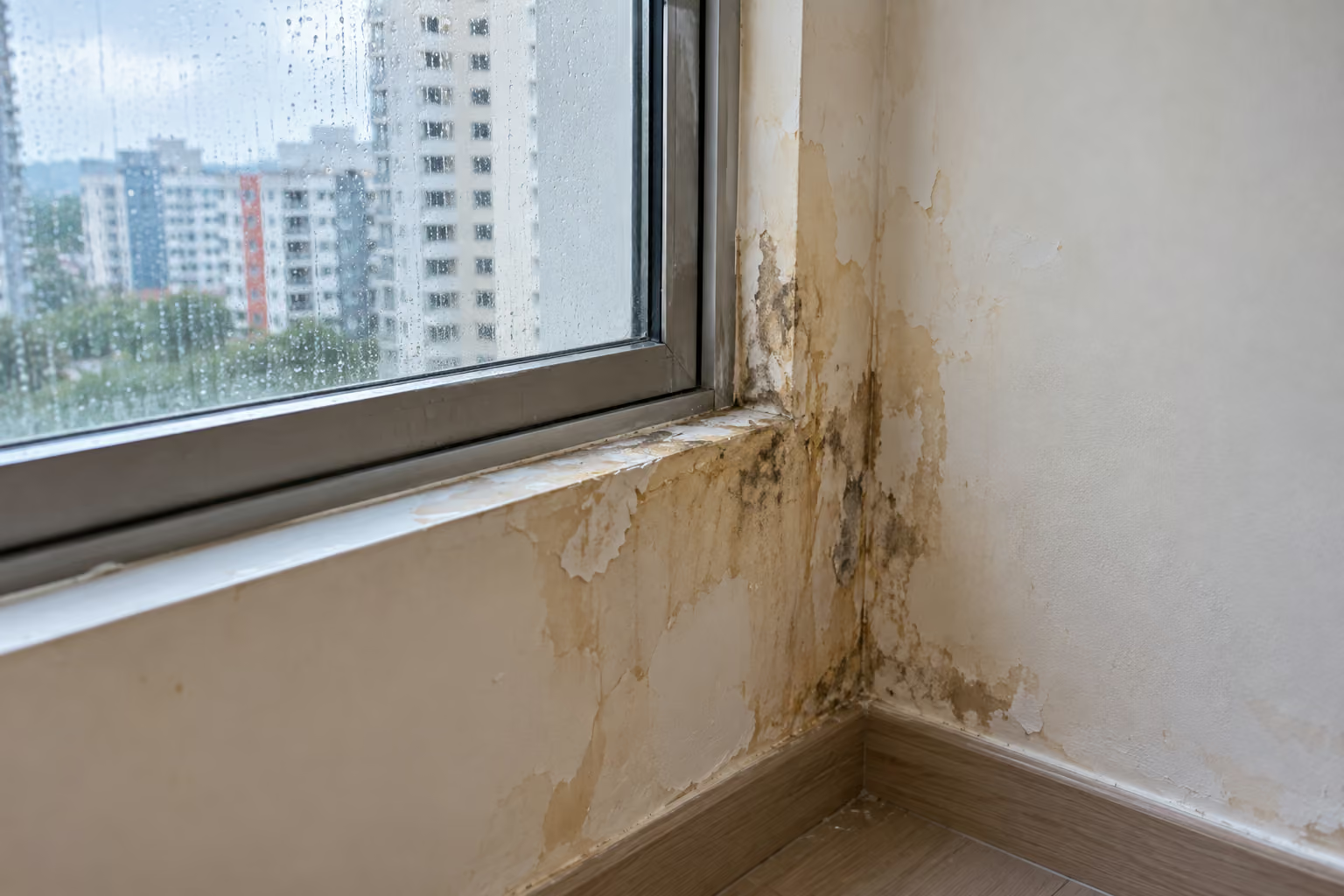
Both problems can look similar indoors. You may see damp patches, peeling paint, mould, yellow stains or water streaks. The main difference is where the water enters: window frame leaks start around the window area, while external wall seepage can enter through the wall surface, cracks or concrete joints.

‍

Why Walls Get Wet After Rain in Singapore

Singapore homes and buildings are exposed to frequent rain, strong sunlight, humidity and temperature changes. Over time, external walls, window sealant and façade coatings can weaken.

When rainwater enters through a small gap or crack, it may travel behind paint, plaster, tiles, concrete or wall finishes before appearing indoors.

This is why homeowners often ask:

  • Why is my wall wet after rain?
  • Is the leak from my window frame?
  • Is it external wall seepage?
  • Why does the stain disappear during dry weather?
  • Can I just repaint the wall?
  • Do I need waterproofing repair?

The key is to identify the source before repairing the surface.

‍

Cause 1: Window Frame Leak

‍

A window frame leak happens when rainwater enters through gaps around the window.

This is common when the sealant has aged, cracked, shrunk or detached. During heavy rain, especially when rain is blown against the window, water may enter through small openings and travel into the surrounding wall.

‍

Common signs of a window frame leak

You may notice:

  • Water stains beside or below the window
  • Damp patches around the window frame
  • Peeling paint near window corners
  • Mould near the window area
  • Water trail after heavy rain
  • Cracked or missing sealant
  • Wet wall only during windy rain
  • Stains returning after repainting

If the stain starts close to the window edge, window frame leakage should be checked first.

‍

Cause 2: External Wall Seepage

External wall seepage happens when rainwater enters through the outer wall surface.

This may be caused by hairline cracks, porous concrete, failed wall coating, weak plaster, façade joint issues or gaps around wall penetrations. The water may then travel inward before appearing as an internal wall stain.

‍

Common signs of external wall seepage

You may notice:

  • Damp wall after rain
  • Stain on an external-facing wall
  • Peeling or bubbling paint
  • Mould growth near wall corners
  • White powdery marks
  • Damp patch that spreads over time
  • Wall feels cold or damp
  • Stain appears even when the window area looks dry
  • Leak returns after every rainy period

External wall seepage can be harder to trace because the entry point may not be directly behind the visible stain.

‍

Cause 3: Joint, Crack or Pipe Penetration Gaps

Sometimes, the issue is not only the window or the wall surface. Water can also enter through small gaps around building joints and pipe penetrations.

These weak points may include:

  • Aircon pipe openings
  • Wall-floor joints
  • Concrete construction joints
  • Balcony wall joints
  • Parapet wall cracks
  • External pipe penetrations
  • Gaps around ledges or wall openings

‍

If the stain appears near an aircon trunking, pipe area, balcony edge or corner, the surrounding joint should also be inspected.

‍

Why the Stain Disappears During Dry Weather

A wall stain may look lighter after a few dry days, but that does not mean the leak is solved.

The surface may dry, but the water entry point may still remain. Once the next rain comes, water may enter again through the same window gap, wall crack or façade defect.

This is why many homeowners experience stains that “come and go”.

If the same patch becomes darker after rain and lighter during dry weather, the source is likely still active.

‍

Can You Just Repaint the Wall?

No. Repainting only covers the visible stain.

If rainwater is still entering from the window frame or external wall, the new paint may eventually peel, bubble or stain again.

You should avoid repainting until the water source has been identified and repaired. Otherwise, the problem may return after the next heavy rain.

How to Check If It Is a Window Frame Leak

After rain, check the window area carefully.

Look for:

  1. Cracked or missing sealant
  2. Dampness along the window frame
  3. Water marks below the frame
  4. Stains at the window corners
  5. Gaps between the frame and wall
  6. Mould beside the window
  7. Water entering during windy rain
  8. Peeling paint close to the window edge

If most signs are close to the window frame, the leak may be window-related.

‍

How to Check If It Is External Wall Seepage

Check the wider wall area, not just the window.

Look for:

  1. Hairline cracks on the wall
  2. Damp patches away from the window
  3. Peeling paint on external-facing wall
  4. White powdery stains
  5. Stain that spreads after rain
  6. Mould at wall corners
  7. Water marks below beams or wall joints
  8. Previous repainting that failed

If the dampness appears across a wider wall area, the source may be external wall seepage.

‍

Why Proper Diagnosis Matters

Window frame leaks and external wall seepage require different repairs.

If the problem is a window frame leak, resealing the frame may help. If the problem is external wall seepage, resealing only the window may not solve the issue.

Similarly, if the external wall has cracks or failed coating, repainting the internal wall will not stop water from entering.

‍

A proper inspection should check:

  • Window sealant condition
  • External wall cracks
  • Façade coating condition
  • Nearby balcony or ledge areas
  • Aircon pipe openings
  • Wall joints and corners
  • Whether the leak happens only after rain
  • Whether the wall remains damp during dry weather

‍

Why Choose Triton Construction?

‍

Triton Construction Pte Ltd provides waterproofing and water leakage repair services for residential, commercial and industrial properties in Singapore.

We help assess whether damp walls after rain are caused by window frame leakage, external wall seepage, wall cracks, balcony leakage, roof seepage or pipe surrounding leakage.

‍

Our services include:

  • External wall leakage repair
  • Wall seepage repair
  • Window perimeter sealing
  • PU injection grouting
  • Ceiling leakage repair
  • Roof waterproofing
  • Balcony waterproofing
  • Planter box waterproofing
  • Bathroom waterproofing
  • Concrete crack repair
  • Pipe surrounding leakage repair

‍

Our goal is to identify the source of water seepage and recommend a suitable repair method instead of simply covering the visible stain.

Contact us now

Frequently Asked Questions (FAQ)

Let us answer your questions about waterproofing.
Why is my wall wet after rain?

Your wall may be wet after rain because water is entering through a leaking window frame, external wall cracks, failed wall coating, balcony edge, aircon pipe opening or other external gaps.

How do I know if the leak is from my window frame?

It may be a window frame leak if the stain appears beside or below the window, the sealant is cracked, or water enters during heavy or windy rain.

How do I know if it is external wall seepage?

It may be external wall seepage if the damp patch appears on an external-facing wall, away from the window frame, or if there are cracks, peeling paint, mould or white powdery stains on the wall.

Can I just seal the window frame?

Only if the window frame is the actual source. If the water is entering through the external wall or cracks nearby, sealing the window alone may not solve the problem.

Why does the stain come back after repainting?

The stain comes back because repainting does not stop water from entering. The source of seepage must be repaired before repainting.

Can external wall seepage be repaired from inside?

Some cracks or joints may be treated internally, but external wall seepage often requires external repair or waterproofing because the water is entering from outside.

Waterproofing Leak Expert
Wei Jie
Triton Construction - Your Waterproofing Specialist