
.png)
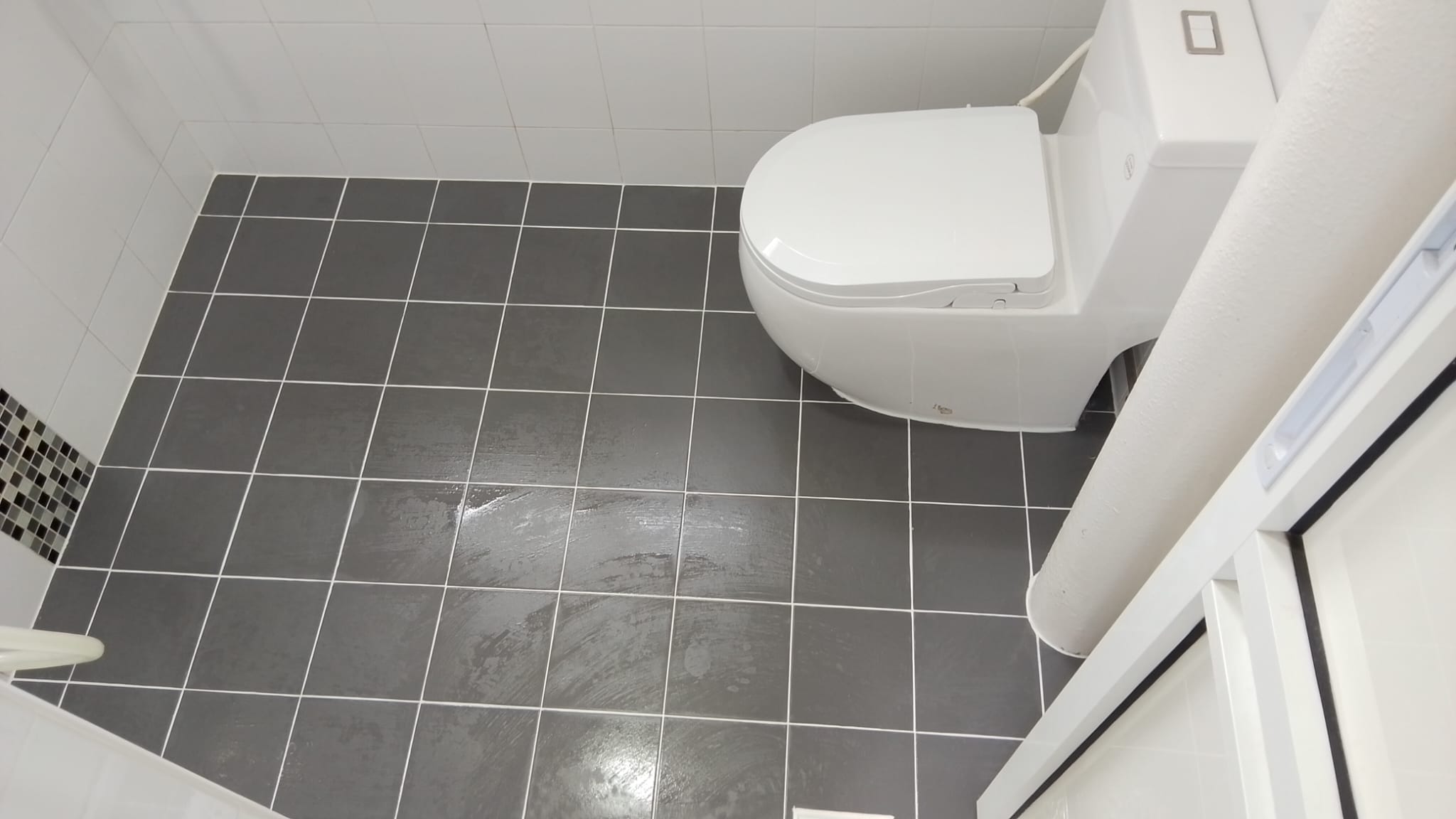
Short answer:
Regrout if the problem is only on the surface — stained, cracked or mouldy grout lines, with tiles that are still firmly stuck and no leak appearing below.
Re-tile, with fresh waterproofing underneath, if the problem is under the tiles — a leak into the unit below, persistent damp, white salt stains, or tiles that sound hollow. The reason is simple and it is the thing most homeowners get wrong: grout is not waterproofing. Regrouting a problem that actually lives beneath the tiles only hides it for a few months.
Choosing between the two isn't really a budget decision — it's a diagnosis. Spend the right money once and your bathroom is sorted for a decade or more. Spend on the wrong fix and you pay twice: first for the cosmetic patch, then again for the proper repair after the leak comes back. This guide shows you how to tell which one you need before you commit.
Here is the single most expensive misunderstanding in bathroom repairs: people assume the grout between their tiles is what keeps water out. It isn't.
Grout fills the gaps between tiles so dirt and water don't sit in the joints, and it holds the tiles visually together. The actual waterproof barrier is a membrane applied to the slab and screed beneath the tiles, hidden from view. Tiles and grout are the finish; the membrane is the seal.
So when water is genuinely getting through — showing up as a stain on your neighbour's ceiling, a damp patch that never dries, or white crusty deposits on the wall — the failure is almost always below the tiles, in the membrane, not in the grout you can see. Regrouting in that situation is like repainting a wall to stop a roof leak. It looks fixed for a while, then the water finds its way out again.
That single distinction — surface problem versus below-the-tile problem — decides everything that follows.
Regrouting means raking out the old, tired grout from between your existing tiles and replacing it with fresh grout, often a water-resistant epoxy grout that resists cracking and mould far better than standard cement grout. The tiles stay exactly where they are.
Regrouting is the right call when:
What regrouting does not do is replace or repair the waterproofing membrane. If water is already getting past the tiles, new grout won't stop it — and switching to epoxy grout, while a genuine upgrade for appearance and mould resistance, still isn't a waterproofing system. Regrouting is cosmetic and preventive maintenance, not a leak repair.
It is, however, quick, low-cost and low-disruption: no hacking, no permit, usually done in a day.
Full re-tiling means hacking off the existing tiles and screed back to the slab, and rebuilding properly: a new waterproofing membrane, a water ponding test to prove it holds, fresh screed laid to fall, then new tiles. In Singapore, once you hack a wet area you are required to reinstate the waterproofing membrane, and it must pass that ponding test before tiling — this is not optional.
Full re-tiling is the right call when:
This is the most expensive and disruptive option, but it's the only one that actually renews the hidden waterproofing layer. If the membrane is the problem, this is the fix — there is no shortcut to a layer that lives under everything else.
There's a middle path that often gets overlooked: laying new tiles directly over the existing ones, with no hacking. It's cheaper than a full re-tile — in an HDB flat, skipping the hacking and debris disposal typically saves somewhere in the region of S$1,200 to S$2,800 — and far faster.
But overlay comes with hard limits, and one big catch:
Overlay is a genuinely good option when your waterproofing is sound and your tiles are intact, and you simply want a new look quickly and affordably. It is the wrong option whenever water is actually getting through.
Before any contractor quotes you, you can narrow it down yourself:
1. Check the unit below (or your own ceiling). A stain, drip or damp patch on the ceiling beneath a bathroom is the clearest sign the membrane has failed. That points to re-tiling, not regrouting.
2. Tap your tiles. Knock firmly across the floor and walls. A sharp, solid sound is good. A hollow, drum-like sound means the tile has debonded — the surface is failing, and overlay/regrout won't save it.
3. Look for efflorescence. White, crusty, salt-like deposits on walls or grout lines mean water is moving through the structure. That's a membrane issue.
4
4. Smell and feel. A persistent musty smell or a patch that never fully dries after the bathroom's been unused points below the tiles.
5. Inspect the grout in isolation. If the grout is just dirty, mouldy or cracked but everything else is dry, sound and stain-free — that's the one clean case for a simple regrout.
If only point 5 applies, regrout. If any of points 1 to 4 apply, you're looking at re-tiling with new waterproofing, and you should get the source properly diagnosed first.
Figures below are indicative 2026 Singapore market ranges and vary with bathroom size, materials, condition and access.
Picture the common path. A bathroom shows a damp patch and some tired grout. The cheapest quote says "just regrout it." A few hundred dollars later it looks great — for three months. Then the stain reappears on the ceiling below, because the membrane was the real problem all along. Now you're paying to hack, re-waterproof, ponding-test and re-tile anyway — plus, potentially, your neighbour's ceiling repair. You've paid for the cosmetic fix and the structural one.
Regrouting is excellent value when the problem is genuinely cosmetic. It's the most expensive option of all when it's used to paper over a leak. The money is saved or wasted at the diagnosis stage, not the repair stage.
A good waterproofing specialist won't simply quote you for the job they prefer to sell. They'll find the source first — checking the ceiling below, tapping for hollow tiles, reading moisture levels, and inspecting the wall-floor junctions and floor trap where leaks usually start — and only then recommend regrout, overlay or a full re-tile.
That diagnosis-first approach is the whole point. The right answer might be a simple, inexpensive regrout — and a contractor who tells you that, rather than upselling a full hack you don't need, is the one worth trusting. Equally, if the membrane has gone, no amount of new grout will save it, and being told the truth early saves you paying twice.
At Triton Construction, we find the source before we recommend the fix. Sometimes that means a simple, affordable regrout — and we'll tell you so. Sometimes it means hacking back and rebuilding the waterproofing properly, with a ponding test to prove it holds. As a Singapore waterproofing specialist now offering full renovation works, we make the call based on what your bathroom actually needs, not on the job we'd rather sell.
[Contact Triton Construction for a waterproofing-first bathroom renovation →]