
.png)
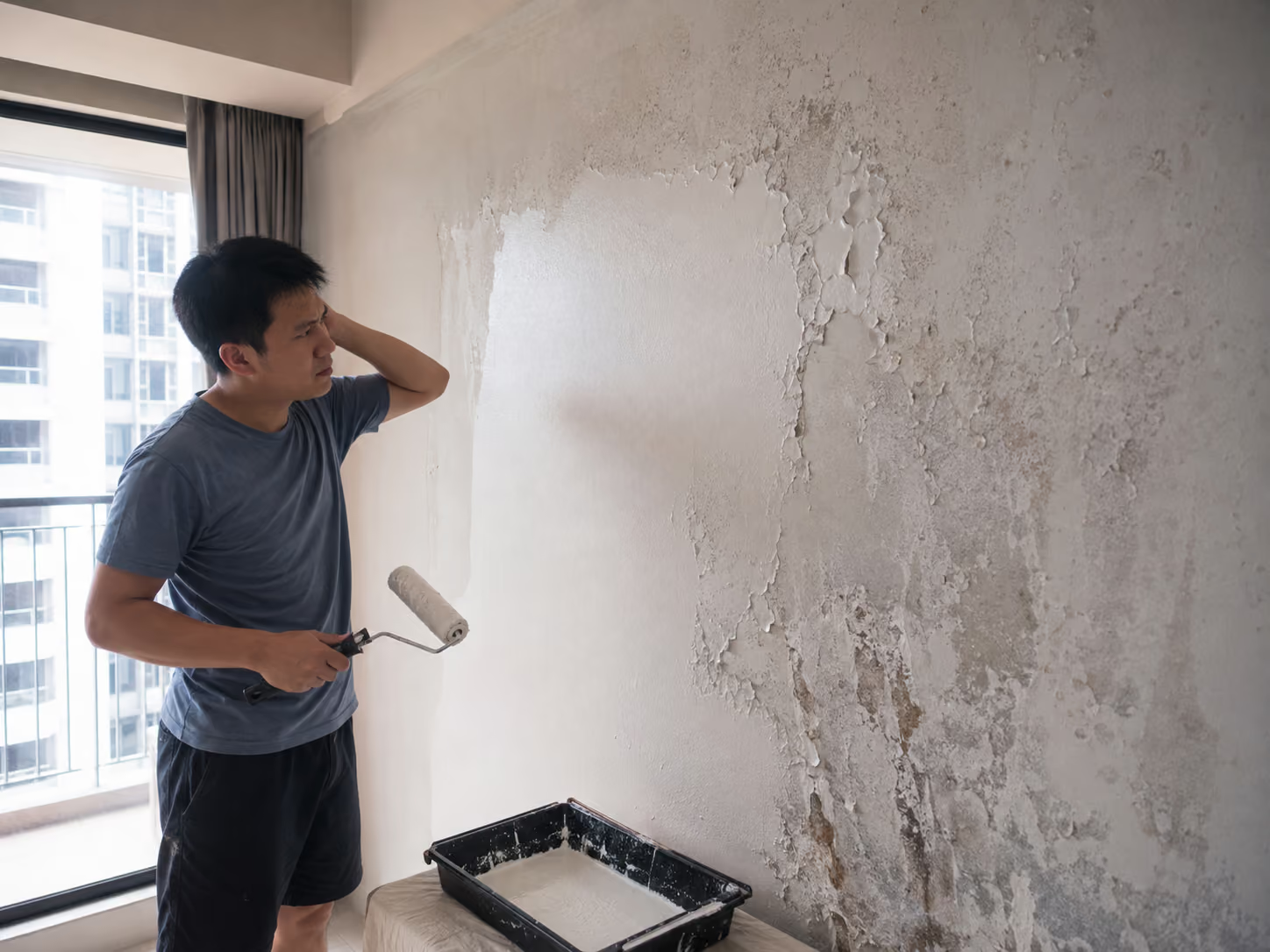
Waterproof paint can help protect a dry surface, but it cannot stop active water seepage if moisture is still entering from behind the wall, below the floor, through cracks, or from the base of the wall.
If the source of water seepage is not fixed first, the same problems may return even after painting. These include peeling paint, blistering, white powdery stains, damaged plaster, damp patches and mould growth.
In simple terms: waterproof paint finishes the wall. It does not fix the source of water seepage.
Many homeowners in Singapore notice damp walls, peeling paint or water stains and immediately think of applying waterproof paint.
It sounds like a simple solution. If the wall is wet, use waterproof paint to block the water.
Unfortunately, this does not always work.
Waterproof paint is a surface coating. It may help protect the wall surface when the area is already dry and the source of moisture has been repaired. But if water is still moving inside the wall, behind the paint, from the floor area or through cracks, the paint will not solve the root problem.
That is why some walls look newly painted for a while, only for the same stain, peeling or bubbling to return later.
Water seepage happens when moisture slowly enters or moves through walls, ceilings, floors, concrete, plaster, tiles or joints.
Unlike a burst pipe, seepage may not always appear as obvious dripping water. It can show up slowly as damp patches, stains, mould, peeling paint or white powdery marks.
In Singapore homes and buildings, water seepage may come from:
Because there are many possible sources, painting over the affected area without identifying the cause can lead to repeated problems.
Waterproof paint only works on the surface. But many seepage problems start from behind, below or inside the wall.
If moisture continues entering the wall, the paint layer becomes a temporary cover-up instead of a real repair.
If water is entering through a crack, failed waterproofing layer, roof defect, planter box, balcony or wall base, applying paint does not stop the water from entering.
The surface may look better temporarily, but the moisture can continue moving behind the paint.
When the wall remains damp internally, the paint may lose adhesion. Over time, the paint can start to bubble, blister, peel or flake.
This is why some homeowners repaint the same wall again and again, but the problem keeps returning.
White powdery stains on walls are often linked to moisture movement. When water passes through concrete, plaster or masonry, it can carry salts to the surface. When the moisture evaporates, white deposits may appear.
Painting over these stains without fixing the moisture source usually does not solve the problem.
If the wall plaster has already absorbed moisture, it may become soft, powdery or weak. Paint cannot strengthen damaged plaster.
In some cases, the damaged surface must be properly removed, treated and repaired before repainting.
If the wall remains damp behind the paint, mould may continue to grow, especially in humid or poorly ventilated areas.
Painting over mould or dampness does not remove the moisture condition that caused the mould in the first place.
Waterproof paint is not useless. It simply has to be used at the right stage.
Waterproof paint may be useful when:
In other words, waterproof paint can be part of the final finishing process, but it should not be treated as the main solution for active seepage.
Waterproof paint is unlikely to provide a lasting solution if:
If these signs are present, the source of water seepage should be assessed before repainting.
If you notice water seepage, damp walls or peeling paint, do not rush to repaint immediately.
A better approach is:
Find out where the moisture is coming from. Is it from rain, wall cracks, roof leakage, bathroom waterproofing failure, a pipe area, planter box, balcony, basement wall or the wall base?
The repair method depends on the source. Possible solutions may include waterproofing repair, crack sealing, PU injection grouting, membrane repair, drainage correction, pipe surrounding repair or planter box waterproofing.
After the source is treated, the wall should be given enough time to dry. Painting too early can trap moisture and cause the problem to return.
If plaster, paint or wall finishes have been damaged, they may need to be removed and repaired before repainting.
Only after the source has been treated and the wall is dry should paint be applied as the finishing layer.
The right method depends on the cause and site condition.
Common waterproofing and seepage repair methods include:
There is no one-size-fits-all solution. A proper assessment helps avoid unnecessary hacking, repeated repainting and temporary patch-up work.
Before requesting a quote, take clear photos and videos of the affected area.
Send:
These details help narrow down the likely source of seepage.
You should contact a waterproofing specialist if:
Early assessment can help prevent the damage from spreading to plaster ceilings, flooring, carpentry, electrical points and surrounding walls.
Triton Construction Pte Ltd provides waterproofing and water seepage repair services for residential, commercial and industrial properties in Singapore.
We help assess damp walls, ceiling stains, peeling paint, wall seepage and recurring water marks before recommending the suitable repair method.
Our services include:
Our goal is to fix the source of water seepage, not just cover the visible stain.