Balcony Waterproofing Singapore: Why Your Balcony Leaks After Rain

Waterproofing Leak Expert
Wei Jie
Last Updated: 3 Oct 2026
•
13 min read
Close-up of a red tiled roof with visible cracks and sealant applied along the tile edges indicating roof repair, water leakage issues

Quick Answer

‍

Your balcony may leak after rain because water is entering through failed waterproofing, cracked tiles, damaged grout lines, poor drainage, wall-floor joints, planter boxes, balcony edges or gaps around door frames and window frames.

‍

In Singapore, balconies are constantly exposed to rain, humidity and heat. Over time, waterproofing layers can weaken, grout lines can crack, and water may seep below the tiles. When this happens, water can travel through the slab, wall joints or ceiling below, causing stains, damp patches, peeling paint or active dripping.

‍

The key is to identify the actual water entry point before applying sealant or repainting. Surface patching alone may not solve the problem if the waterproofing layer has already failed.

‍

Why Balcony Leaks Are Common in Singapore

‍

Balconies are one of the most exposed areas of a property. Unlike indoor rooms, they are regularly affected by rainwater, sunlight, washing, wind-driven rain and temperature changes.

‍

This is especially common in:

  • Condominiums
  • Landed houses
  • Roof terraces
  • Outdoor patios
  • Balcony areas with planter boxes
  • Balconies above living rooms or bedrooms
  • Older properties
  • Recently renovated homes with poor waterproofing detailing

‍

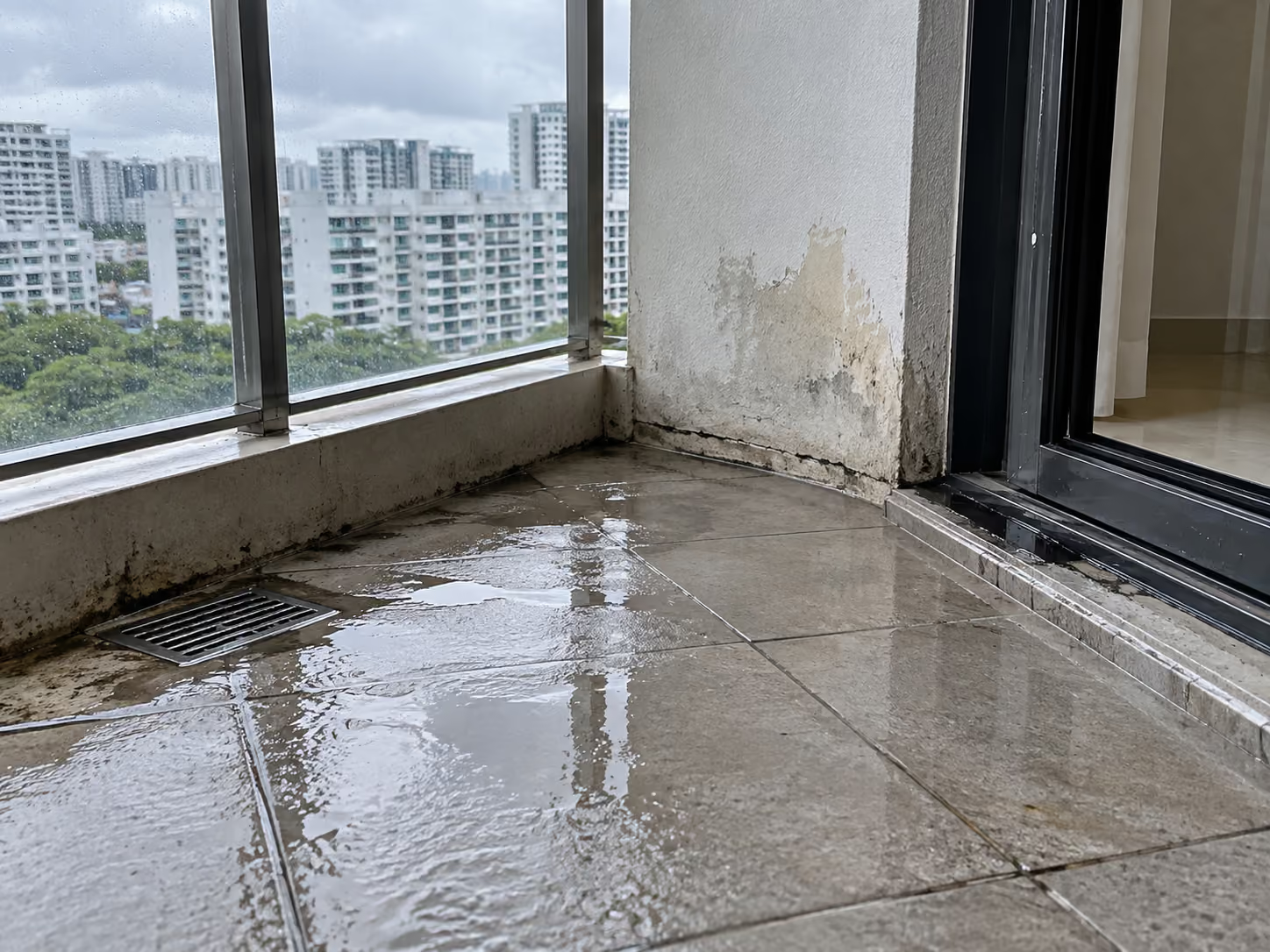
A balcony leak may not be obvious at first. It may start as a faint ceiling stain below the balcony, a damp wall near the balcony edge, or peeling paint after heavy rain.

‍

Signs Your Balcony May Be Leaking

‍

You may have a balcony waterproofing issue if you notice:

  • Water stain on the ceiling below the balcony
  • Damp patch near balcony wall
  • Peeling paint around balcony edge
  • Water mark after heavy rain
  • Mould growth near balcony corner
  • White powdery stains on wall or floor
  • Loose or cracked tiles
  • Cracked grout lines
  • Water ponding on balcony floor
  • Dripping from ceiling below balcony
  • Damp skirting near balcony entrance
  • Musty smell near balcony-facing wall

‍

If the stain appears mainly after rain, the source is likely related to rainwater seepage rather than an internal pipe leak.

‍

Why Your Balcony Leaks After Rain

‍

There are several possible causes. The correct repair method depends on where the water is entering.

‍

1. Failed Balcony Waterproofing Membrane

The waterproofing membrane is usually installed below the tiles or screed. Its job is to prevent water from passing through the balcony slab.

Over time, the membrane can fail due to ageing, movement, poor installation, cracks, water ponding or repeated exposure to rain and heat.

When the membrane fails, water may seep below the tiles and travel through the slab. This can cause leakage to the ceiling or wall below.

‍

Common signs of membrane failure:

  • Stain appears on ceiling below balcony
  • Leak returns after every rain
  • Water mark spreads over time
  • Paint keeps peeling after repainting
  • Tiles feel hollow or loose
  • Dampness remains even after dry weather

If the membrane has failed badly, surface sealant may not be enough.

‍

2. Cracked Tiles or Damaged Grout Lines

Balcony tiles and grout lines are exposed to constant weather changes. Over time, grout can crack, loosen or wear away.

Once grout lines open up, rainwater can seep below the tile surface. This may not cause immediate dripping, but moisture can collect under the tiles and eventually travel to nearby walls or ceilings.

‍

Watch out for:

  • Missing grout
  • Hairline cracks between tiles
  • Darkened tile joints
  • Loose tiles
  • Hollow sound when tapping tiles
  • Water sitting along grout lines

Regrouting may help only if the problem is shallow and localised. If water has already entered below the tiles for a long time, deeper waterproofing repair may be needed.

‍

3. Poor Balcony Drainage

Good drainage is important for balcony waterproofing. Even if the waterproofing system is properly installed, water should not remain on the balcony floor for long periods.

If water does not flow properly to the floor trap or drainage outlet, ponding can occur. Standing water increases pressure on tile joints, grout lines and waterproofing layers.

‍

Poor drainage may be caused by:

  • Blocked floor trap
  • Incorrect floor slope
  • Debris around drainage outlet
  • Water flowing away from the drain
  • Drainage outlet too small
  • Balcony floor unevenness
  • Poor renovation workmanship

If water keeps ponding after rain, the balcony should be checked before leakage worsens.

‍

4. Wall-Floor Joint Leakage

The joint where the balcony floor meets the wall is a common weak point.

This area needs proper waterproofing upturn and sealing. If the membrane does not extend high enough, or if the joint cracks over time, rainwater may enter through the wall-floor junction.

‍

Signs of wall-floor joint leakage:

  • Damp line along balcony wall base
  • Peeling paint near floor level
  • Stain below balcony edge
  • Water mark along internal wall
  • Mould near wall corners
  • Cracks at the floor-wall junction

This type of leak is common when waterproofing detailing was not done properly during renovation or construction.

‍

5. Balcony Edge or Threshold Leakage

Water can enter at the balcony edge, sliding door threshold or transition between indoor and outdoor flooring.

If the threshold is not properly sealed or if the balcony level allows rainwater to flow toward the door, water may seep indoors or into the slab.

‍

Common problem areas:

  • Sliding door tracks
  • Balcony door threshold
  • Wall openings
  • Window frame edges
  • Balcony perimeter joints
  • Floor level transition between indoor and outdoor areas

This can result in damp flooring, swollen skirting, stains near door frames or water entering the living room during heavy rain.

‍

6. Planter Box Leakage Beside the Balcony

Many balconies have planter boxes or garden features. These areas hold soil, water and roots, which can create constant moisture exposure.

If the planter box waterproofing fails or the drainage is blocked, water may seep into the balcony slab, wall or ceiling below.

‍

Signs of planter box-related leakage:

  • Damp wall beside planter box
  • Leak after watering plants
  • Stain below planter area
  • White powdery stains
  • Mould near planter wall
  • Water remains trapped after rain
  • Soil stays wet for too long

For planter boxes, waterproofing and drainage must be considered together. Waterproofing alone may not work if water cannot drain properly.

‍

7. External Wall or Façade Seepage Near the Balcony

Sometimes, the balcony floor is not the only issue. Rainwater may enter through external wall cracks, façade joints or gaps around windows and sliding doors.

The water may then travel down and appear near the balcony, wall or ceiling.

This may happen when:

  • External wall has hairline cracks
  • Sealant around window frames has aged
  • Façade coating has failed
  • Rainwater enters during windy rain
  • Water stains appear near balcony-facing wall
  • Stains appear higher up the wall, not only at floor level

This is why a balcony leak should be assessed together with nearby walls, windows and external-facing surfaces.

‍

Why Surface Sealant May Not Solve a Balcony Leak

‍

Many homeowners try to apply sealant over tile joints, cracks or balcony edges.

This may help temporarily if the issue is minor and localised. However, if water is already trapped below the tiles or the waterproofing membrane has failed, surface sealant may not stop the leak permanently.

Water can continue travelling under the tile layer and appear at another weak point.

‍

Surface patching may fail when:

  • The waterproofing membrane is damaged
  • Water is trapped inside the screed
  • There are multiple leakage paths
  • Tiles are hollow or loose
  • Drainage is poor
  • Planter box waterproofing has failed
  • The actual source is an external wall or window gap

‍

A proper assessment is needed before deciding whether surface repair, injection, drainage correction or full waterproofing reinstatement is required.

‍

What Happens If Balcony Leakage Is Ignored?

A small balcony leak can become more serious over time.

Ignoring it may lead to:

  • Ceiling stains below the balcony
  • Peeling paint
  • Mould growth
  • Plaster damage
  • Tile debonding
  • Damp walls
  • Water entering indoor areas
  • Damage to flooring or skirting
  • Damage to built-in carpentry
  • Neighbour complaints
  • More expensive repair later

Early repair can help prevent the water from spreading to other areas.

‍

How to Check Your Balcony After Rain

After heavy rain, inspect your balcony before the surface dries.

Check for:

  1. Water ponding on the floor
  2. Cracks in tiles or grout lines
  3. Damp patches along wall-floor joints
  4. Water stains below the balcony
  5. Mould near corners
  6. Loose or hollow tiles
  7. Blocked floor trap or drain
  8. Dampness near sliding door tracks
  9. Stains beside planter boxes
  10. Water marks near external wall areas

Take photos immediately after rain and again after the area dries. This helps show whether the stain is recurring.

‍

What Photos Should You Send for Assessment?

Before requesting a quote, send:

  • A full photo of the balcony
  • A close-up photo of cracked grout, tiles or wall joints
  • Photos of the floor trap and drainage outlet
  • Photos of any ceiling stains below the balcony
  • Photos of nearby sliding doors, windows or external walls
  • Photos of planter boxes if nearby
  • A video if water is dripping
  • Photos taken after rain
  • Property type: condo, landed, commercial or industrial
  • Whether the issue has been repaired before

These details help determine whether the issue may be balcony waterproofing, wall seepage, drainage failure, planter box leakage or another source.

‍

Why Choose Triton Construction?

‍

Triton Construction Pte Ltd provides waterproofing and water leakage repair services for residential, commercial and industrial properties in Singapore.

We help assess balcony leaks and recommend suitable repair methods based on the source of water seepage. Instead of simply applying surface sealant, we check whether the issue may involve failed waterproofing, cracked joints, poor drainage, planter box leakage, external wall seepage or threshold gaps.

Our services include:

  • Balcony waterproofing
  • Balcony leakage repair
  • Wall-floor joint sealing
  • PU injection grouting
  • Tile grout and joint repair
  • Planter box waterproofing
  • External wall leakage repair
  • Roof waterproofing
  • Ceiling leakage repair
  • Bathroom waterproofing
  • Pipe surrounding leakage repair
  • Concrete crack repair

‍

Our goal is to treat the source of leakage and reduce the chance of recurrence.

Contact us now

Frequently Asked Questions (FAQ)

Let us answer your questions about waterproofing.
Why does my balcony leak after rain?

Your balcony may leak after rain because water is entering through failed waterproofing, cracked grout, loose tiles, poor drainage, wall-floor joints, sliding door gaps, planter boxes or external wall cracks.

How do I know if my balcony waterproofing has failed?

Signs include ceiling stains below the balcony, damp patches, peeling paint, hollow tiles, cracked grout, water ponding, mould growth and stains that return after rain.

Can balcony leakage be fixed without hacking?

Sometimes. No-hacking repair may work for selected localised leaks if the tiles are firm and the water path is clear. If the membrane has failed badly or water is trapped below tiles, hacking and reinstatement may be needed.

Why does the ceiling below my balcony stain after rain?

This usually means rainwater is seeping through the balcony floor, wall-floor joint, planter box, drainage area or external wall and travelling to the ceiling below.

How long does balcony waterproofing last?

The lifespan depends on the waterproofing system, workmanship, exposure, drainage, maintenance and site condition. Regular checks after rain can help detect early issues.

Waterproofing Leak Expert
Wei Jie
Triton Construction - Your Waterproofing Specialist